

Reviewed by Jose Joseph CFP®, founder of EBlink and a practising employee benefits consultant.
Employee Benefits Broker Insurer Management: 7 Tips. South African employee benefits brokers regularly communicate with insurers, benefit providers, employers and other stakeholders to support the administration of employee benefits arrangements. When correspondence, outstanding requests and important updates are scattered across emails and spreadsheets, it can become difficult to maintain a clear view of what needs attention.
Employee benefits broker insurer management is about creating a consistent process for organising provider relationships, recording important interactions and following up on outstanding matters. It helps brokerage teams maintain better visibility without relying entirely on individual inboxes or memory.
Whether you manage a small employee benefits brokerage or a growing practice, the following seven tips can help you organise provider-related work more effectively.
1. Keep Provider Information Organised
Start by maintaining accurate records for the insurers and providers your brokerage works with.
Depending on your business needs, useful information may include:
- Provider or insurer name.
- Relevant business contact details.
- Products or benefit arrangements supported.
- Internal relationship owner.
- Relevant contact history.
- Outstanding matters requiring follow-up.
Use consistent naming conventions so team members can find the right record quickly. Where multiple people deal with the same provider, a shared record can help prevent information from becoming isolated in individual inboxes.
Keep information relevant to your work, and ensure confidential records are accessible only to appropriate team members.
2. Record Important Provider Correspondence
An email may confirm a request, clarify a product detail or explain what information is still needed. If the important outcome is not recorded, colleagues may have to reconstruct the discussion later.
For significant provider interactions, record the date, subject, key outcome and any agreed next steps.
For example, if an insurer requests additional employer information before progressing a matter, note what was requested, who is responsible for obtaining it and when the brokerage plans to follow up.
Keep the original correspondence where necessary, subject to your information-management policies. A short, accurate interaction note can help colleagues understand the context without searching through an entire email thread.
EBlink includes an Interactions section that brokers can use to organise relevant client-related activity. Consider how interaction records fit into your wider process for documenting provider-related work.
3. Track Outstanding Requests and Responsibilities
Provider-related tasks can stall when no one is clearly responsible for the next step.
Create a simple method for recording outstanding requests. For each item, capture:
- The employer or arrangement involved.
- The insurer or provider.
- The outstanding requirement.
- The person responsible for the next action.
- The date to follow up.
- The current status.
For example, a request may be waiting for employer confirmation, supporting documentation or a response from the provider. Recording the status helps your team understand what is holding up progress.
Do not assume that sending an email completes the task. Where the matter requires a response or confirmation, keep it open until the agreed next step has been completed or appropriately resolved.
4. Standardise How Your Team Communicates
Consistent communication can make provider relationships easier to manage.
Establish internal guidelines for recording requests, confirming important details and communicating changes. Where appropriate, include the employer or scheme reference in correspondence so the recipient can identify the relevant matter.
Before sending a request, check that it includes the information the provider needs to respond. Avoid sending unnecessary personal or confidential information, and use appropriate channels when sharing sensitive documents.
For complex matters, summarise the agreed outcome and next action in writing. This creates a clearer record for the people responsible for progressing the work.
Standardisation does not mean every message must be identical. It means your team follows a reliable process while adapting communication to the situation.
5. Connect Provider Activity to Employer Records
Provider correspondence often relates directly to an employer relationship, product or upcoming renewal. If those records are disconnected, it may be difficult to understand the wider context.
Where your systems allow it, connect relevant correspondence and tasks to the appropriate employer or benefit arrangement.
For example, when preparing for a renewal, a broker may need to review provider responses, confirm outstanding information and coordinate the next discussion with the employer.
A consistent record structure helps the team understand how each task relates to the broader client relationship. It can also make handovers easier when another team member needs to take responsibility.
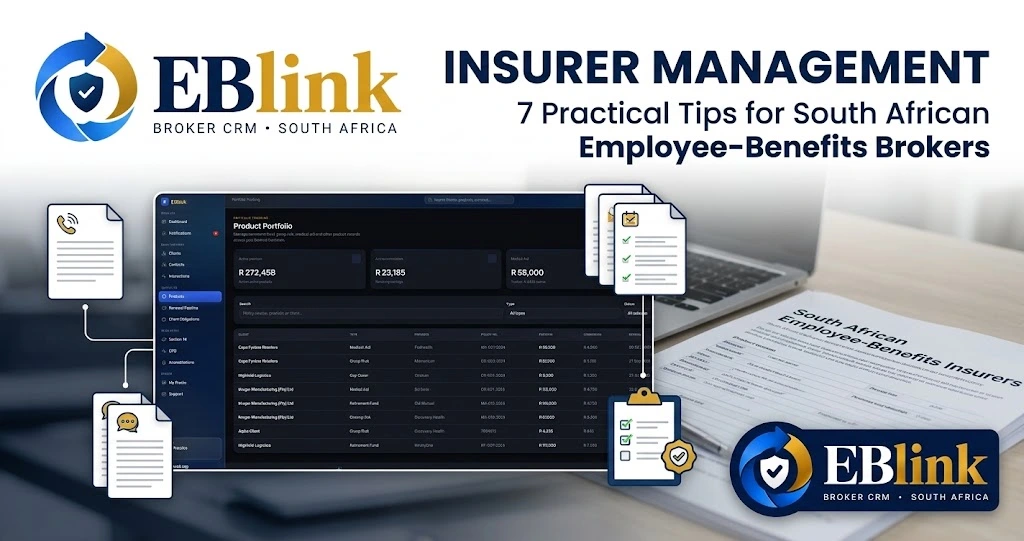
EBlink offers Clients, Contacts, Products, Interactions and Renewal Pipeline sections to support different parts of brokerage practice management. Your team can use the relevant records and workflows to organise related activity.
6. Review Delayed Matters Regularly
An unanswered email does not always mean a provider has ignored a request. The matter may require more information, internal review or clarification.
Nevertheless, delayed items need visibility.
Schedule a regular review of outstanding provider-related work. Ask:
- Which requests are awaiting a response?
- Which matters need information from an employer?
- Which follow-ups are overdue?
- Has responsibility for each item been assigned?
- Are there upcoming renewals or reviews affected by the delay?
- Does the employer need an appropriate progress update?
Set follow-up dates according to the nature and urgency of the matter, your service commitments and any applicable deadlines. Avoid promising turnaround times you cannot control.
A regular review helps your team identify bottlenecks and decide what action is appropriate.
7. Use a Broker CRM to Improve Practice Visibility
When provider information, client records, interactions and renewal activity are spread across disconnected tools, staff may spend unnecessary time searching for updates.
A broker-focused CRM can help centralise relevant employer information and make ongoing practice activity easier to review.
When evaluating a CRM for a South African employee benefits brokerage, consider whether it supports:
- Organised employer and contact records.
- A useful history of interactions.
- Product information management.
- Renewal pipeline visibility.
- Tracking of client obligations.
- Clear ownership of follow-up responsibilities within your working process.
EBlink is designed for employee benefits brokers in South Africa. Its Clients, Contacts, Products, Interactions, Renewal Pipeline and Client Obligations sections support different aspects of organising client relationships and practice activity.
A CRM should complement—not replace—appropriate provider agreements, secure communication channels, professional judgement and your brokerage’s established procedures.
Explore the EBlink broker CRM to learn more about the platform. You can also review the EBlink broker CRM features and broker CRM pricing to assess whether it fits your practice.
Maintain Better Visibility Across Provider Relationships
Effective insurer and provider management depends on accurate records, clear responsibilities and consistent follow-up. Start by organising provider details, recording important correspondence, assigning outstanding requests and reviewing delayed matters regularly.
These practices can help your brokerage maintain better visibility over its work while supporting more consistent service to employer clients.
The right tools can make the process easier to maintain. If you want to organise client information, interactions, products and renewal activity within a broker-focused platform, visit EBlink or contact the EBlink team to learn more.
Follow EBlink for further guidance for South African employee benefits brokers: