
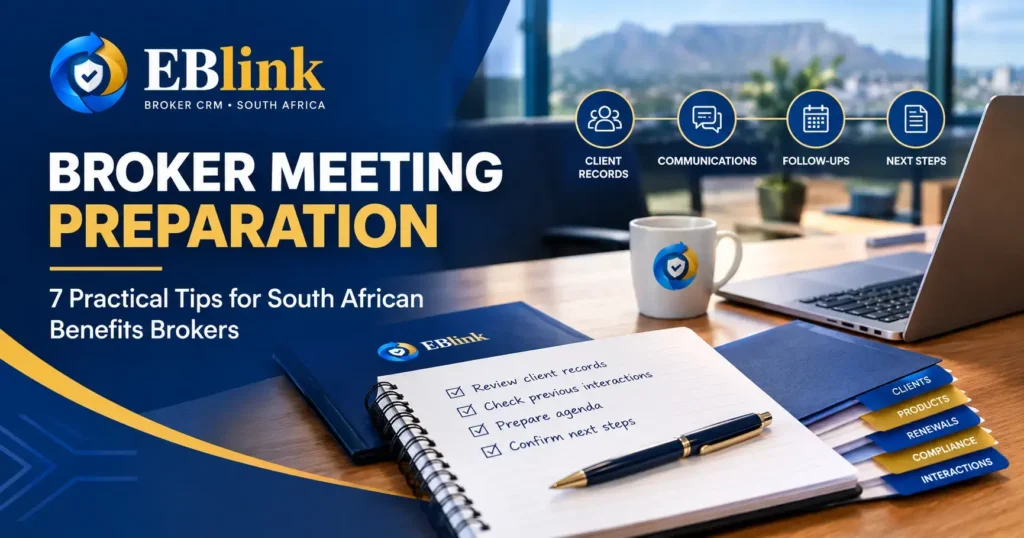
Employee Benefits Broker Meeting Preparation: 7 Tips. Preparing for a client meeting takes more than checking your calendar. South African employee-benefits brokers need to understand each employer’s requirements, review outstanding issues, track previous discussions and identify the next steps before meeting clients.
A structured approach to broker meeting preparation helps you make better use of meeting time, communicate more clearly and maintain organised client relationships.
Whether you are preparing for a routine employer review, discussing employee-benefit changes or following up on outstanding service requests, these seven practical tips can help you prepare more effectively.
1. Review the Employer’s Client Records
Start by reviewing the employer’s existing client records before the meeting.
Check the information you already hold, including relevant contacts, benefit arrangements, previous discussions and outstanding requests. This helps you avoid asking clients to repeat information they have already provided.
Pay attention to missing or outdated details that may need to be confirmed during the meeting.
For South African employee-benefits brokers, organised records can also make it easier to understand the context behind an employer’s questions and service requirements.
Practical tip: Create a short pre-meeting checklist of the information you need to review and the details that still require confirmation.
2. Check Previous Interactions and Outstanding Actions
Previous conversations often contain important details about what the employer expects next.
Review relevant emails, call notes, meeting records and outstanding actions before the appointment. Identify any commitments that still need attention and check whether the responsible person has provided an update.
Prepare a short list covering:
- Issues raised during the previous meeting.
- Information promised to the employer.
- Outstanding queries requiring a response.
- Follow-up actions that need an update.
- Decisions that still require confirmation.
This helps you enter the meeting with a clear understanding of what has happened and what needs to happen next.
3. Understand the Employer’s Current Priorities
Every employer has different employee-benefits needs. Some may want to review their existing arrangements, while others may have questions about employee communication, administration or upcoming changes.
Before the meeting, identify the employer’s known priorities and any questions that should be addressed.
Consider whether there have been changes to the employer’s requirements, workforce or benefit arrangements that the client has already communicated to you.
Avoid making assumptions about what the employer wants. Use the meeting to confirm priorities, clarify concerns and agree on appropriate next steps.
Practical tip: Prepare three key questions that will help you understand the employer’s current needs.
4. Prepare Relevant Product and Benefit Information
Make sure you have the relevant information available for the topics expected to be discussed.
Depending on the meeting, this might include existing benefit arrangements, product information, previous correspondence or details of an outstanding service request.
Check that the information is current and that you understand any limitations or outstanding confirmations. If you need information from an insurer or another provider, establish what has been confirmed and what still requires a response.
Do not present unverified information as a final answer. If a detail needs confirmation, record it as an action item and agree on a suitable follow-up.
5. Identify Renewal Dates and Important Deadlines
Although not every client meeting is about renewals, upcoming dates can affect the discussion.
Review relevant renewal dates, scheduled reviews and known deadlines before the meeting. This helps you identify issues that may need attention before they become urgent.
For each important date, establish:
- What needs to happen.
- Who is responsible for the next action.
- Whether any information is outstanding.
- When the action should be completed.
- Whether the employer needs an update.
A structured renewal process can help your brokerage maintain visibility over upcoming work. Learn more about EBlink’s broker CRM features and how organised practice information can support your workflow.
6. Prepare a Clear Meeting Agenda
A simple agenda gives the discussion direction and helps you use the available time effectively.
Your agenda could include:
- Review of previous actions.
- Employer’s current priorities and concerns.
- Relevant benefit or service updates.
- Outstanding queries and deadlines.
- Agreed actions and next steps.
Adjust the agenda to suit the purpose of the meeting. A routine check-in may need only a few discussion points, while a detailed employer review may require more preparation.
Share the agenda in advance when appropriate so that participants can prepare any information they need.
7. Record Decisions and Assign Follow-Up Actions
Preparation should continue after the meeting. A useful discussion can lose its value if decisions, responsibilities and deadlines are not recorded.
After the meeting, document the key points, decisions made, outstanding questions and agreed actions. Assign responsibility for each follow-up and record any relevant due dates.
Update the appropriate client records so that the information remains accessible when you or another authorised team member needs it.
Where suitable, use a CRM to keep client information, interactions and follow-up activities organised in one workflow. This can reduce dependence on scattered notes and individual reminders.
You can explore EBlink to learn more about a broker CRM designed for South African employee-benefits brokers.
Use a Repeatable Client Meeting Preparation Process
A consistent preparation process helps brokers approach meetings with better organisation and a clearer understanding of each employer’s needs.
Before your next client meeting, check that you have reviewed the client records, previous interactions, outstanding actions, relevant benefit information and important deadlines. Prepare your agenda and make sure there is a process for recording the outcomes.
Over time, this routine can help your brokerage maintain continuity across client relationships and manage follow-up work more systematically.
How EBlink Can Support Your Broker Workflow
EBlink is a broker CRM designed for South African employee-benefits brokers. Organised client records and interaction tracking can support a more structured approach to managing information across your brokerage.
Explore the EBlink broker CRM features to see whether they suit your practice’s needs. You can also review EBlink pricing or contact EBlink to discuss your requirements.
Prepare for your next client meeting with a clearer process and better-organised information.