

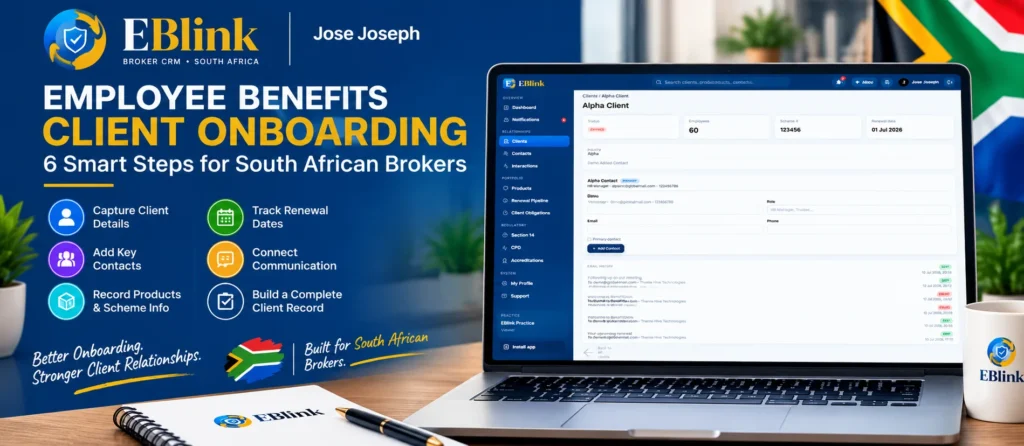
Employee Benefits Client Onboarding South Africa: 6 Smart Steps. Employee benefits client onboarding is an important part of building a well-organised brokerage practice. For South African employee benefits brokers, onboarding a new employer group involves more than simply recording a client name and contact number.
You may need to capture employee information, scheme details, key contacts, renewal dates, product information, communication history and important follow-up activities.
When this information is spread across spreadsheets, emails and separate documents, it can become difficult to maintain a clear view of the client relationship.
A structured CRM workflow can help South African brokers bring this information together from the beginning.
Here are six smart steps for creating a more organised employee benefits client onboarding process.
1. Capture the Client’s Core Information
The first step in employee benefits client onboarding is creating a clear client record.
Important information can include:
- Employer or group name
- Industry
- Number of employees
- Scheme or policy information
- Renewal date
- Current status
- Key notes about the client
Having this information available in one client profile gives the broker a central reference point.
Instead of searching through different spreadsheets or email threads, the team can start with one structured record.
With EBlink CRM, client information can be organised within the client record so that important details are easier to access during day-to-day servicing.
2. Record the Right Contacts
A new employer group may have several people involved in the relationship.
The HR manager may be the primary contact, while finance, management or other stakeholders may also need to be included.
A useful employee benefits client onboarding process should therefore capture:
- Contact names
- Roles
- Email addresses
- Phone numbers
- Primary contact status
- Additional stakeholders
Keeping these details together makes future communication easier and reduces the risk of relying on outdated contact information.
It also gives the broker a clearer understanding of who is responsible for different parts of the client relationship.
3. Record Products and Scheme Information
Employee benefits clients may have several products or benefit arrangements.
Depending on the client, this could include retirement funds, group risk, medical aid or other employee benefit solutions.
Recording the relevant product information during onboarding helps create a stronger foundation for future servicing.
It also makes it easier to connect client information with upcoming renewals and other practice activities.
This is where a CRM can provide more structure than a basic spreadsheet.
Instead of treating client information as isolated rows of data, the broker can build a connected view of the client, contacts, products and activities.
4. Capture Renewal Dates Early
Renewal dates should not be an afterthought.
When onboarding a new client, recording the relevant renewal information early can help the broker plan future activity around the relationship.
A renewal date can become an important reference point for:
- Review planning
- Client communication
- Product discussions
- Renewal preparation
- Follow-up activities
EBlink CRM includes a Renewal Pipeline designed to help brokers track upcoming renewals and their progress.
The Financial Sector Conduct Authority also provides regulatory and compliance resources for financial services professionals, making it important for practices to maintain appropriate processes and records. You can review the FSCA’s official resources for financial services professionals here: FSCA Financial Services Professionals
5. Keep Communication Connected to the Client
Onboarding does not end after the first client record is created.
The relationship continues through emails, meetings, calls, reviews and other interactions.
A structured CRM approach can help brokers maintain a history of these activities alongside the client record.
This gives the practice a better reference point when someone needs to answer questions such as:
- When did we last contact the client?
- Who did we speak to?
- What was discussed?
- What needs to happen next?
- Has the client responded?
Keeping communication connected to the client can reduce unnecessary searching and help create a more consistent servicing process.
6. Turn Onboarding Into an Ongoing Workflow
The final step is to treat onboarding as the beginning of the client journey rather than a once-off administrative task.
Once the client is captured, the broker can continue managing:
- Client relationships
- Contacts
- Products
- Renewals
- Client obligations
- Compliance-related activities
- Follow-ups
- Practice interactions
This creates a more connected workflow across the brokerage.
For South African brokers, this can be particularly useful when managing multiple employer groups and several benefit arrangements at the same time.
The FSCA publishes guidance, regulatory information and compliance resources for financial services providers, which can be used alongside a brokerage’s own internal processes. FSCA Regulatory Resources
Why Employee Benefits Client Onboarding Matters
A structured employee benefits client onboarding process can help a brokerage start each client relationship with better organisation.
Instead of collecting information in different places and trying to connect it later, brokers can establish a central client record from the beginning.
This can make it easier to manage client information, communicate with stakeholders and prepare for future servicing activities.
It also creates a stronger foundation for using CRM features such as renewal tracking, client obligations and interaction history.
How EBlink CRM Supports South African Brokers
EBlink CRM is designed around the workflow of a broker practice, bringing important areas of client and practice management into one system.
From client and contact records to products, renewal pipelines, client obligations and regulatory-related functions, EBlink can help brokers organise the information they need to manage their practice.
For a South African employee benefits broker, the goal is not simply to store more information.
The goal is to make important information easier to find, connect and act on.
That starts with a structured onboarding process.
Final Thoughts
Effective employee benefits client onboarding gives brokers a practical foundation for managing the relationship that follows.
By capturing core client information, recording contacts, organising products, tracking renewal dates, connecting communication and creating ongoing workflows, brokers can build a more consistent approach to client servicing.
For South African brokers looking to move away from scattered spreadsheets and disconnected records, a dedicated CRM can provide a more organised way to manage the client journey.
EBlink CRM brings client management, contacts, products, renewals, client obligations and practice activity together in one broker-focused platform.